Searching for “types of fence posts choose the right one” to plan a secure and durable fencing project? The best fence post depends on the fencing system, steel profile, structural function, protective finish, and installation conditions. For contractors, engineers, and property owners in Saudi Arabia, understanding these factors helps prevent unsuitable material selection and unnecessary project costs.
This guide explains the main fence post types, compares their applications, and shows how Arab Fences can help you identify compatible fencing solutions.
Types of Fence Posts Choose the Right One for Your Project
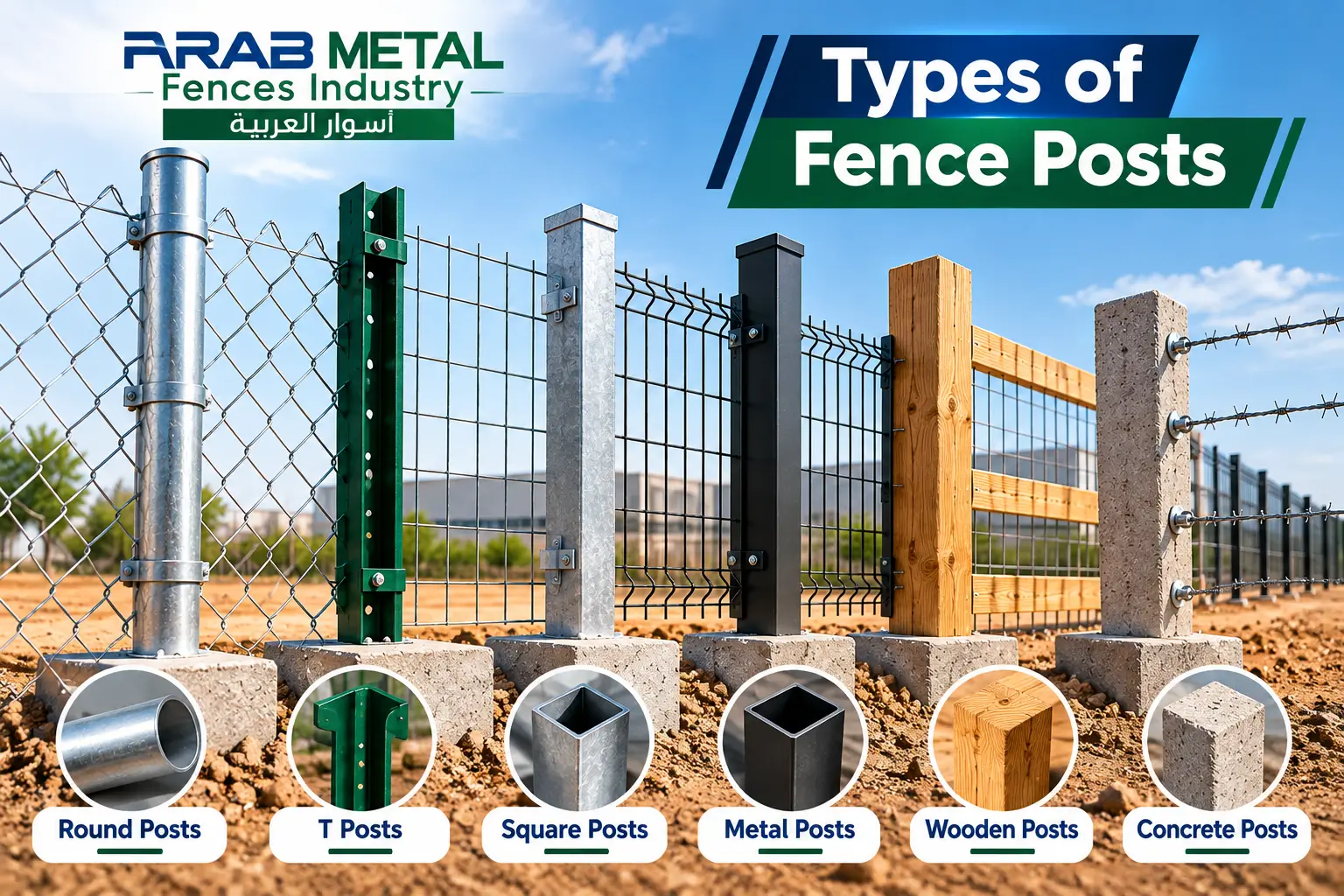
If your search is “types of fence posts choose the right one,” start by identifying the fence system and the job each post must perform. Fence posts support mesh, panels, rails, and fittings while transferring loads into the foundations or supporting structure. A post that works well in a short agricultural fence may not be suitable for a tall commercial perimeter, a tensioned chain link fence, or a heavy gate.
Fence posts are generally classified by their shape, structural position, and surface treatment. Round, square, and rectangular posts describe the steel profile. Line, corner, terminal, and gate posts describe their function. Galvanized and powder-coated posts describe the protective finish. These classifications overlap, so the correct choice must account for the complete fence assembly.
Arab Fences manufactures fencing solutions in Saudi Arabia, including chain link and 3D welded mesh systems with compatible post configurations and accessories. Selecting the complete system before specifying individual posts helps ensure that panels, connections, and supporting components work together.
Planning a fencing project? Contact Arab Fences to discuss suitable post configurations and request a quotation based on your requirements.
Main Types of Metal Fence Posts and Their Applications
When exploring “types of fence posts choose the right one,” it is important to compare the available steel profiles and understand their applications. Round, square, rectangular, and formed steel posts offer different connection options and structural characteristics. The most suitable profile depends on the selected fencing system, required performance, and project specifications.
Round Steel Fence Posts
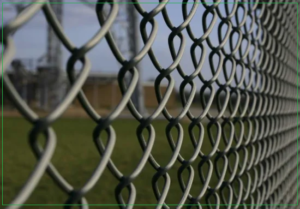
Round tubular posts are commonly used in chain link fencing. Their circular shape accommodates compatible tension bands, clamps, rails, and other fittings that secure the mesh and supporting components. Depending on their specifications, round posts may serve as line posts, corner posts, terminal posts, or gate posts.
They are widely considered for agricultural boundaries, recreational areas, commercial premises, and industrial perimeters. Their suitability depends on diameter, wall thickness, steel grade, fence height, and the required connection details.
Arab Fences offers a Chain Link Fence system with post options for different security requirements. Its published product specifications reference ASTM A53 Schedule 40 and Schedule 80 for heavy-duty applications, alongside other configurations for different project needs.
Square Steel Fence Posts
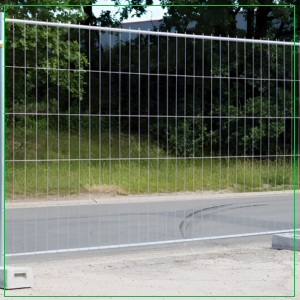
Square hollow-section posts have flat faces that can accommodate suitable brackets, clamps, and panel connections. They are frequently considered for metal panel fencing where a regular appearance and straightforward alignment are important.
However, the shape alone does not determine strength. Engineers must consider section dimensions, wall thickness, steel grade, unsupported height, applied loads, and the way the post connects to the foundation.
Rectangular Steel Fence Posts
Rectangular hollow-section posts offer different face dimensions and may be selected for particular panel layouts. Their orientation can influence connection arrangements and structural behavior, especially where loads act in different directions.
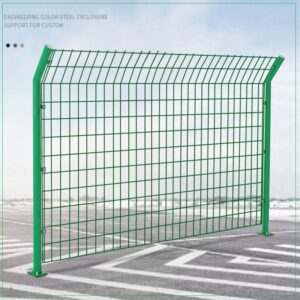
Arab Fences uses hollow structural steel posts in its 3D Welded Mesh Fencing System. The published product range includes different post dimensions and compatible accessories such as clamps, post caps, fasteners, and optional base plates.
U-Posts, T-Posts, and Y-Posts
Formed steel profiles such as U-posts, T-posts, and Y-posts are commonly associated with selected agricultural and temporary fencing applications. Depending on their design, they can support compatible wire fencing and may be installed using methods suited to the ground conditions.
These profiles should not be treated as direct replacements for engineered tubular posts used in permanent welded mesh or heavily tensioned chain link systems. Their use must be assessed against the required fence height, loading, service life, and installation conditions.
For a broader introduction to these shapes, read the related Arab Fences article on Types of Metal Fence Posts and Their Common Uses. Availability of individual formed profiles should be confirmed before ordering.
Fence Post Types by Structural Function
For anyone researching “types of fence posts choose the right one,” understanding the difference between line, corner, terminal, and gate posts is essential. Each position serves a specific structural purpose, and the required dimensions, connections, and foundations may vary across the same fencing project.
Line Posts
Line posts support straight sections of fencing between terminal locations. They help maintain panel or mesh alignment and provide intermediate fixing points. Their dimensions and spacing depend on the selected fencing system, approved design, and site conditions.
Corner Posts
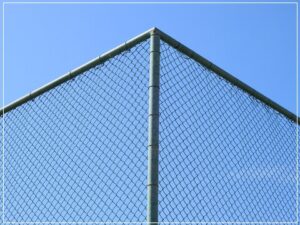
Corner posts are installed where the fence changes direction. In tensioned chain link systems, they resist forces from adjoining fence runs and may require additional bracing, different dimensions, or more substantial foundations than ordinary line posts.
End and Terminal Posts
End posts terminate a fence run and provide secure attachment points for the fencing material. In chain link fencing, terminal posts are particularly important because the fabric is tensioned between designated support locations.
Gate Posts
Gate posts support the hardware and operating forces associated with pedestrian or vehicle access. Hinged gates and sliding gates have different support requirements, so their posts must be selected with the gate dimensions, weight, movement, and connections in mind.
Arab Fences manufactures gate options for its chain link fencing system, including single-leaf and double-leaf arrangements with swing or sliding configurations.
Pull and Straining Posts
Some tensioned fencing layouts require pull or straining posts to manage fabric tension along designated sections. Their location and construction depend on the fencing specification, alignment, and approved installation details.
Share your fence drawings with Arab Fences to identify suitable line, corner, terminal, and gate post requirements for your project.
Fence Post Comparison Table: Which Type Should You Choose?
When comparing “types of fence posts choose the right one,” focus on the intended application, structural role, and compatibility with the selected fence system. The following table provides a practical overview.
| Fence Post Type | Typical Application | Key Benefit | What to Check |
|---|---|---|---|
| Round tubular steel | Chain link fencing | Compatible with tubular fittings | Diameter, wall thickness, and connections |
| Square hollow section | Selected panel fencing systems | Flat fixing faces and regular appearance | Section dimensions and panel compatibility |
| Rectangular hollow section | Selected welded mesh systems | Flexible profile orientation | Loading direction, brackets, and dimensions |
| U, T, or Y profile | Compatible agricultural or temporary fencing | Application-specific formed section | Ground conditions and loading requirements |
| Corner or terminal post | Fence ends and direction changes | Supports critical fence connections | Tension, bracing, and foundations |
| Gate post | Pedestrian and vehicle entrances | Supports gate operation | Gate dimensions, weight, and hardware |
This comparison is intended for preliminary selection. Final post dimensions, foundations, and connections should follow the approved technical design.
Galvanized vs Powder-Coated Fence Posts
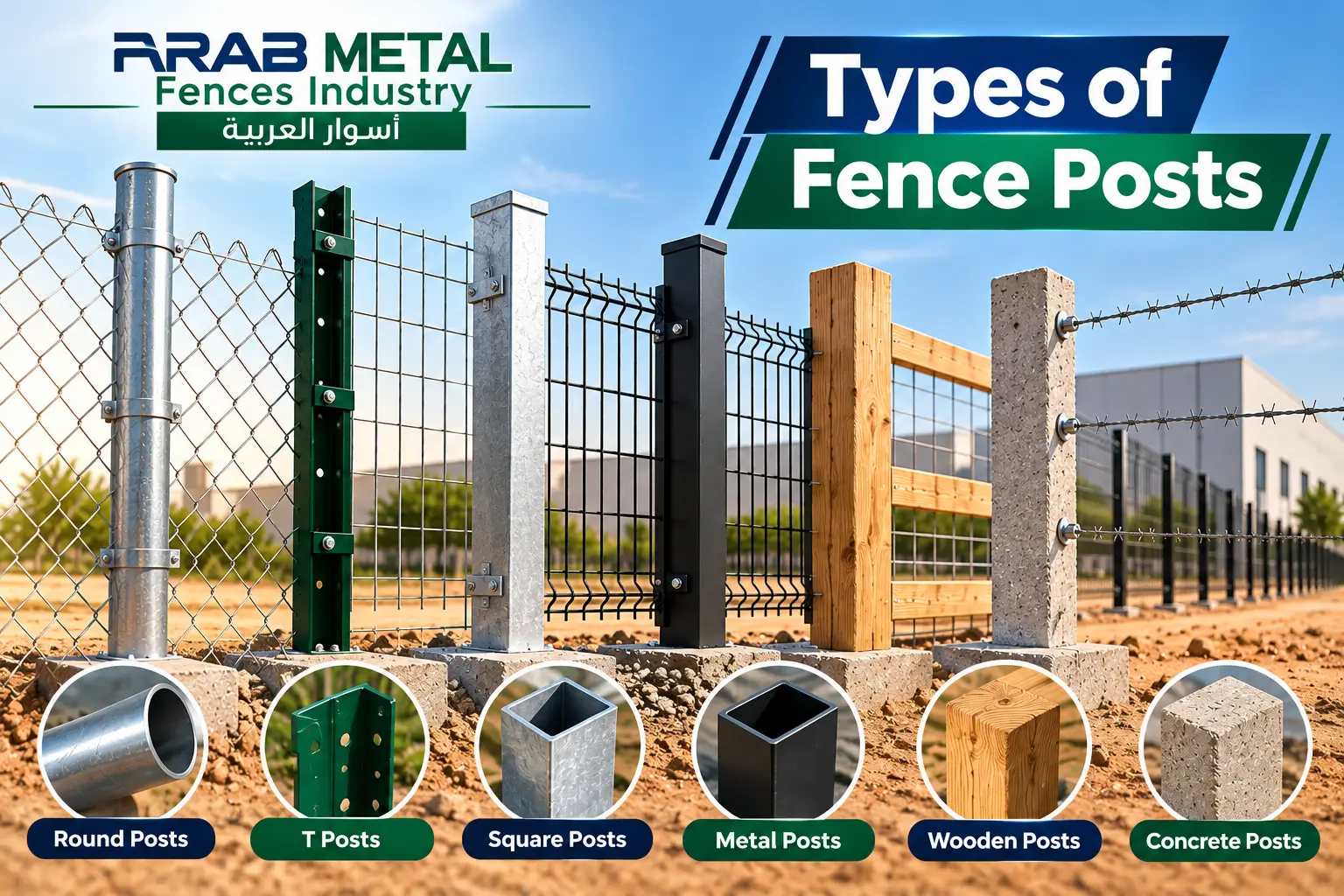
When comparing “types of fence posts choose the right one,” protective coatings should be considered alongside post shape and structural requirements. Galvanized and powder-coated steel posts offer different finishing characteristics, making environmental exposure, corrosion protection, and maintenance important selection factors.
Hot-Dip Galvanized Fence Posts
Hot-dip galvanizing applies a zinc coating to steel components to help protect them against corrosion. The appropriate coating requirements depend on the product, exposure conditions, and applicable technical specification.
Arab Fences lists hot-dip galvanized posts and accessories within its chain link fencing range. Its 3D welded mesh fencing system also includes galvanizing options and references BS EN ISO 1461 and ASTM A123 in its published product information.
Where a project requires documented compliance, clients should confirm the applicable coating standard and inspection requirements for the specific order.
Powder-Coated Fence Posts
Powder coating provides a colored surface finish and can form part of a specified protective coating system. It is often considered when posts and panels need a coordinated appearance.
For its 3D welded mesh system, Arab Fences lists polyester coating options, including black RAL 9005 and green RAL 6005, with other colors available on request.
Which Finish Is Better for Saudi Conditions?
There is no universal answer. The most suitable finish depends on exposure to moisture, salt, industrial pollutants, expected service life, and maintenance requirements. Coastal projects may need more carefully specified corrosion protection than some inland applications.
When comparing options, review the complete coating system rather than the appearance of the post alone. Fasteners, brackets, cut edges, and other exposed steel components should also be considered.
How to Choose the Right Fence Posts for Saudi Projects
Choosing fence posts becomes easier when the selection process follows the project requirements. Contractors and purchasing teams should evaluate the following factors before requesting materials.
Choose the Fencing System First
Chain link fencing and welded mesh panels use different fixing methods and supporting arrangements. Confirm the fencing product before finalizing post profiles, accessories, or spacing.
Determine the Required Fence Height
Fence height affects post length, foundation requirements, and applied loads. Taller fences may require different structural configurations from shorter boundaries.
Assess Wind Exposure
Open terrain, elevated sites, and additional privacy coverings can influence wind loading. The selected posts and foundations must be appropriate for the actual fence configuration.
Review Soil and Foundation Conditions
Loose fill, rock, and other ground conditions can require different foundation solutions. Post embedment depth should follow the approved design rather than a generic rule.
Consider Security and Access
A basic agricultural boundary and a controlled industrial perimeter may need different fencing systems. Gate arrangements, mesh specifications, top extensions, and post connections should be reviewed together.
Specify the Protective Finish
Confirm whether the project requires galvanizing, a colored coating, or another approved finishing arrangement. The specified finish should suit the environmental exposure and maintenance expectations.
Check Drawings and the Bill of Quantities
The BOQ should distinguish between line posts, corner posts, terminal posts, gate posts, and any special configurations. Accurate quantities and specifications help prevent mismatched components and procurement delays.
Need a fencing solution for a commercial, agricultural, or industrial site? Send Arab Fences your technical requirements and request a project-specific quotation.
Fence Post Sizes, Spacing, and Installation Requirements
When researching “types of fence posts choose the right one,” pay attention to the approved dimensions, loading conditions, and installation requirements. No single post size, spacing, or foundation depth is suitable for every fencing project.
Post Dimensions and Wall Thickness
For tubular steel posts, external dimensions and wall thickness influence structural properties. Steel grade, unsupported height, connection details, and foundation restraint must also be considered.
Arab Fences publishes different post specifications for its chain link system and hollow structural steel post options for its welded mesh fencing range. The exact dimensions should be confirmed against the selected product and project requirements.
Post Spacing
Post spacing depends on the fence type, structural design, and installation conditions. For chain link fencing, the ASTM F567-23 installation standard provides technical guidance on post locations, setting procedures, terminal bracing, and associated components.
Referencing this standard does not establish that every Arab Fences product is certified to it. Any required compliance should be supported by the applicable project documentation.
Concrete-Embedded and Base-Plated Posts
Concrete-embedded posts are installed within foundations designed for the ground conditions and applied loads. Base-plated posts use specified anchors to connect the post to a suitable supporting structure.
Arab Fences lists base-plated post options for its 3D welded mesh system. The supporting concrete and anchorage must be assessed before selecting this method.
Installation Quality Checks
- Confirm property boundaries and underground services before excavation.
- Mark the fence alignment, corners, and gate openings.
- Check the approved post spacing and foundation details.
- Verify post alignment and verticality.
- Install the specified bracing, clamps, and connections.
- Inspect gate operation and hardware compatibility.
- Check the condition of protective coatings and exposed surfaces.
- Complete the required inspections before project handover.
These checks are general guidance. Installation must follow the approved drawings, applicable specifications, and requirements of the selected fencing system.
Common Mistakes to Avoid When Choosing Fence Posts
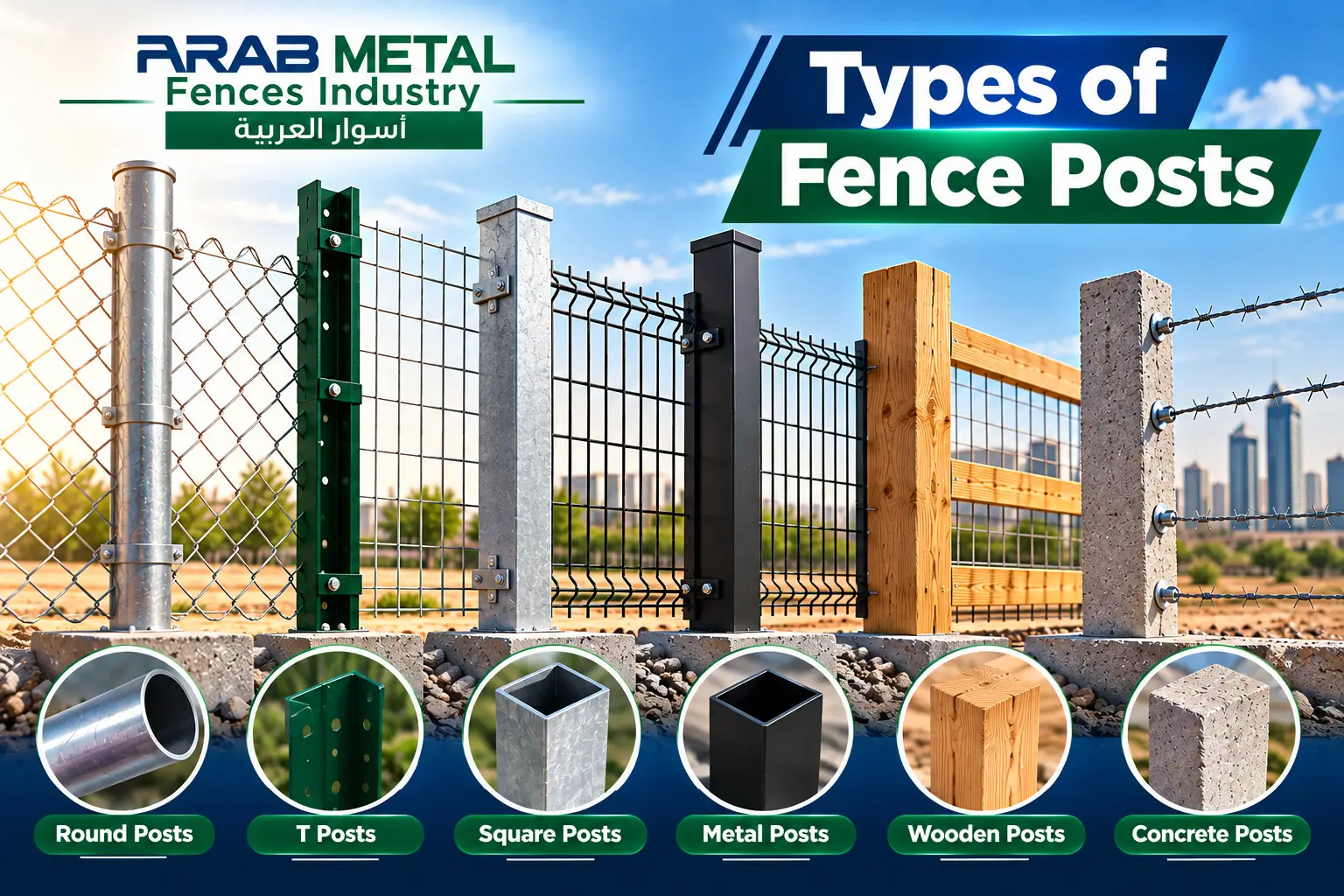
If your goal is to understand “types of fence posts choose the right one,” avoiding common specification mistakes is just as important as comparing available products. Incorrect post dimensions, unsuitable fittings, insufficient consideration of wind loads, and incomplete project drawings can affect the performance and cost of the fencing system.
- Choosing posts solely because they appear thicker or larger.
- Using ordinary line-post specifications for gates without checking the loads.
- Ignoring compatibility between posts, panels, brackets, and fasteners.
- Assuming every galvanized coating offers identical protection.
- Applying generic foundation depths to different soil conditions.
- Ordering materials before confirming the final fence alignment.
- Overlooking the effects of wind exposure and added coverings.
- Comparing supplier quotations without checking included accessories.
A complete technical specification should identify the post profile, dimensions, finish, fixing method, and structural function. This makes quotations easier to compare and helps avoid mismatched materials.
What Affects Fence Post Prices in Saudi Arabia?
For contractors comparing “types of fence posts choose the right one,” pricing should be evaluated against the complete technical specification. Steel dimensions, protective coatings, structural functions, accessories, and project quantities all influence the final quotation. Comparing equivalent specifications helps identify better long-term value.
- Steel profile and section dimensions.
- Wall thickness and steel grade.
- Post height and total quantities.
- Galvanizing or coating requirements.
- Corner, terminal, and gate post specifications.
- Base plates, caps, clamps, and other accessories.
- Project location and transportation requirements.
- Foundation and installation scope, where applicable.
- Required inspection and technical documentation.
For a meaningful price comparison, request quotations based on the same drawings and bill of quantities. Confirm whether each offer includes posts only, the complete fencing system, or additional services.
7 Reasons to Choose Arab Fences for Your Fencing Project
Arab Fences manufactures metal fencing solutions in Saudi Arabia and publishes technical information about its fencing systems. Its documented product range offers several practical advantages for clients selecting fence posts and related components.
- Local manufacturing: Arab Fences manufactures selected fencing systems in Saudi Arabia.
- Chain link fencing solutions: the company offers chain link mesh, compatible post configurations, gates, and associated components.
- 3D welded mesh systems: its product range includes welded panels supported by hollow structural steel posts.
- Protective finish options: selected systems are available with galvanizing and coating alternatives.
- Compatible accessories: published products include clamps, post caps, fasteners, and base-plated post options.
- Gate configurations: the chain link range includes single-leaf and double-leaf swing or sliding arrangements.
- Product configuration choices: published specifications provide options that help clients define the appropriate fencing system for their project.
Exact dimensions, finishes, availability, inspection documents, delivery conditions, and the scope of any additional works should be confirmed in the quotation.
Explore the available fencing options and contact Arab Fences to request a quotation based on your project dimensions, quantities, and technical specifications.
How to Request a Fence Post Quotation
To request a quotation, prepare a clear technical description of the required fencing system. Providing accurate information helps define the material scope and reduces uncertainty during procurement.
- Project location in Saudi Arabia.
- Fence system type and intended application.
- Total fence length and required height.
- Post profile, dimensions, and finish if already specified.
- Line, corner, terminal, and gate post requirements.
- Gate sizes and operating arrangements.
- Required accessories and fixing components.
- Drawings, BOQ, and technical specifications.
- Requested scope of supply and additional works.
- Required delivery schedule and documentation.
If the final post specification has not been selected, provide the approved fencing requirements and site information so the available product configurations can be reviewed.
Contact Arab Fences to submit your project details and request a fence post quotation.
Frequently Asked Questions About Fence Posts
Can fence posts be ordered separately from fencing panels?
Arab Fences publishes posts as components of its fencing systems. Separate supply availability should be confirmed directly with the sales team.
Does Arab Fences offer different fence post dimensions?
Yes. The company publishes different post dimensions for selected fencing systems. Non-standard requirements should be confirmed through a project-specific quotation.
Can fence posts be supplied with base plates?
Yes. Base-plated posts are listed as an option for the Arab Fences 3D welded mesh fencing system.
Are extension arms available for fence posts?
Yes. Arab Fences lists extension arms for barbed-wire arrangements among the options associated with its welded mesh fencing system.
Are fence post caps included in the system?
Post caps are listed among the accessories for the 3D welded mesh fencing system. Their inclusion in a particular order should be confirmed in the quotation.
Can fence posts match black or green fencing panels?
Arab Fences lists black RAL 9005 and green RAL 6005 among the coating options for its 3D welded mesh system. Confirm the required finish for all components.
Does Arab Fences supply posts for heavy-duty chain link fencing?
Its chain link product page references ASTM A53 Schedule 40 and Schedule 80 post options for heavy-duty applications. The applicable specification depends on the project requirements.
Can the same fence post be used for different fence heights?
Not necessarily. Post dimensions and foundations must suit the fence height, loading conditions, and approved design.
Does Arab Fences manufacture gates to match chain link fencing?
Yes. The company states that it manufactures gates locally with chain link infill to match its fencing system.
How can I request technical information before ordering?
Contact Arab Fences with your project drawings, fence type, dimensions, quantities, and required specifications to discuss the available options.
Choose the Right Fence Posts with Arab Fences
If you are comparing “types of fence posts choose the right one” for long-term performance, evaluate the complete fencing system rather than appearance or unit price alone. Post shape, structural function, protective finish, foundation conditions, and compatible fittings all influence the suitability of the final installation. For projects in Saudi Arabia, accurate specifications help contractors and buyers compare options and avoid unnecessary procurement changes.
Arab Fences offers locally manufactured chain link and welded mesh fencing solutions with compatible posts and accessories. Reviewing your project requirements before ordering helps identify the most suitable configuration and define a clear scope of supply.
Ready to specify your fencing project? Request a quotation from Arab Fences and share your drawings, quantities, and technical requirements.