
Wondering how to choose a garden fence that suits your outdoor space, privacy needs and budget? The right choice starts with measuring your garden, identifying the purpose of the boundary and comparing metal fencing systems according to their actual specifications.
Whether you want to define your property, preserve an open view or create a more private seating area, choosing a garden fence requires more than selecting an attractive design.
This practical guide explains six essential steps, from measuring your boundary to planning posts and gates, comparing protective finishes and preparing a clear quotation request. Arab Fences manufactures metal fencing systems in Saudi Arabia, including welded mesh and chain link solutions.
Planning a garden fencing project? Contact Arab Fences to discuss your requirements and request a tailored quotation.
How to Choose a Garden Fence: Start with Your Requirements
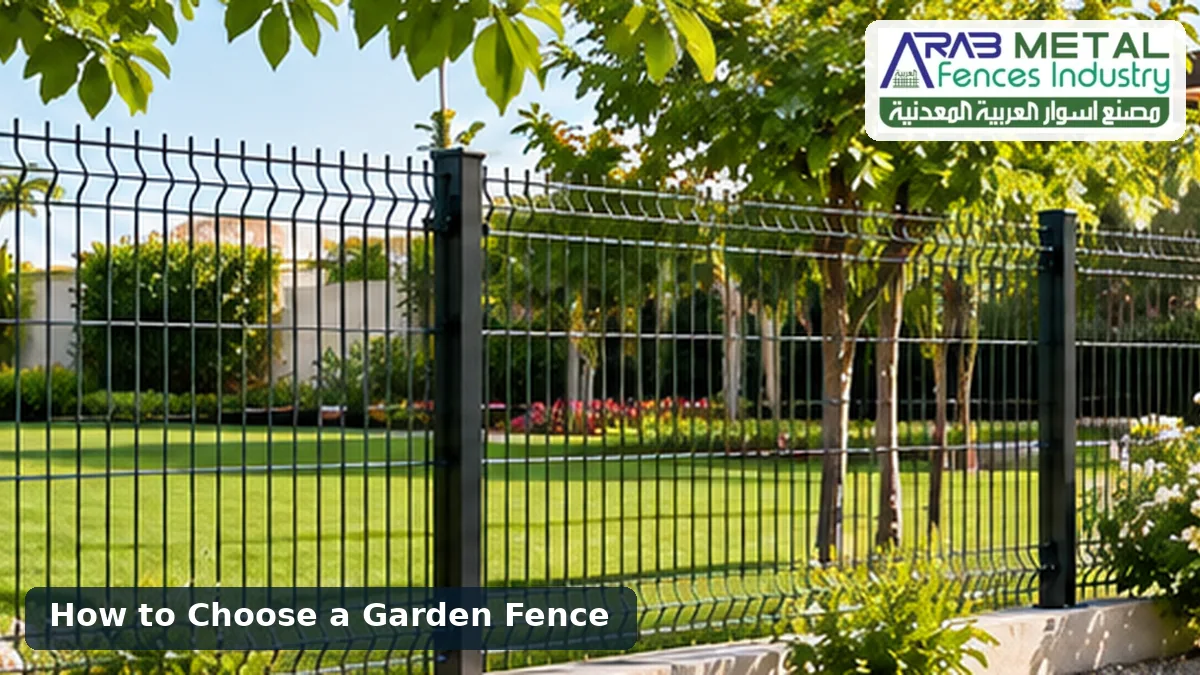
Before comparing garden fencing products, identify what you want the fence to achieve. A boundary designed to preserve visibility may need a different system from one intended to provide visual screening around an outdoor seating area.
The most suitable option depends on your garden layout, site conditions, preferred appearance and intended use.
Identify the Main Purpose of Your Fence
Start by considering these requirements:
- Boundary definition: Clearly separate your garden from surrounding spaces.
- Visual privacy: Reduce direct views into selected outdoor areas.
- Appearance: Complement your home’s architecture and landscaping.
- Airflow: Preserve an open boundary where appropriate.
- Access: Provide convenient pedestrian or equipment entrances.
- Children and pets: Consider gaps, openings, gates and relevant safety requirements.
- Maintenance: Select appropriate materials and protective finishes.
- Budget: Compare complete fencing systems rather than panel prices alone.
Different sections of the same garden may need different arrangements. For example, an open mesh boundary may suit landscaped areas, while a private seating corner could require additional visual screening.
Review Your Garden’s Site Conditions
Consider the property’s ground levels, existing walls, nearby buildings, access routes and environmental exposure.
A fence suitable for a sheltered, level garden may require different supporting components when installed on uneven ground or in an exposed location.
Step 1: Measure Your Garden Perimeter Accurately
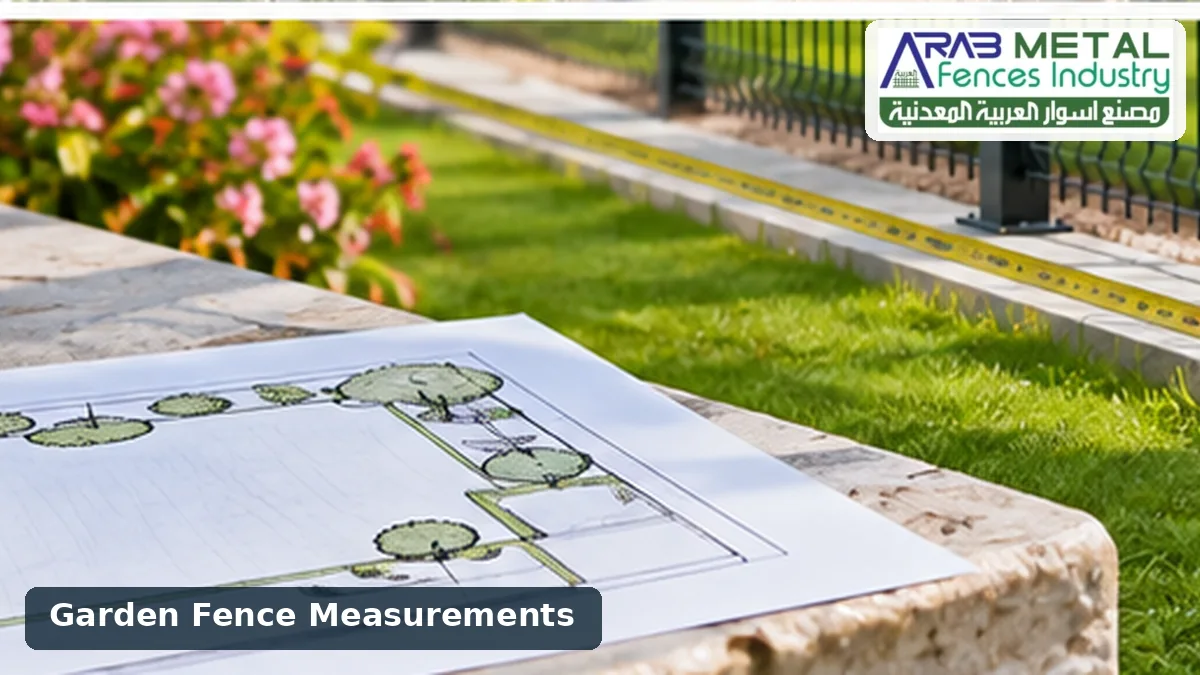
Accurate garden fence measurements help define the required boundary length, identify gate openings and prepare a clearer quotation request.
Do not rely on a rough estimate of the entire garden. Measure each section separately and record its details.
Draw a Simple Garden Boundary Sketch
Create a basic overhead sketch showing the shape of the garden. Mark the corners, existing walls, pathways, obstacles and proposed gate locations.
Label each boundary section with a letter or number. This makes it easier to share dimensions with the supplier and identify areas requiring different fencing configurations.
Calculate the Garden Perimeter
For a rectangular garden where all four sides require fencing, use:
Perimeter = 2 × (Length + Width)
For example, if the garden measures 12 metres by 8 metres:
Perimeter = 2 × (12 + 8) = 40 metres
This is a simple measurement example. The actual fencing quantity depends on which boundaries require fencing and the selected system’s dimensions.
Subtract Planned Gate Openings
Identify the width and position of each garden entrance.
If a 40-metre boundary includes a 1.2-metre gate opening, the remaining nominal fence length is:
40 − 1.2 = 38.8 metres
However, 38.8 metres does not automatically determine the number of panels or posts required. Panel modules, supporting posts, connections and gate arrangements must also be considered.
Record Slopes, Corners and Obstacles
Measure or note changes in ground level, corners, existing foundations, walls and structures that may affect the fencing layout.
Include these details in your enquiry instead of assuming the boundary is perfectly straight and level.
Garden Fence Measurement Checklist
| Measurement | Details to Record |
|---|---|
| Boundary Sections | Length of each side in metres |
| Total Fence Length | Combined length of required sections |
| Fence Height | Preferred height for each section |
| Garden Gates | Number, width and location |
| Corners | Positions and approximate angles |
| Ground Conditions | Slopes and level changes |
| Existing Structures | Walls, foundations and obstacles |
| Project Location | City and site details in Saudi Arabia |
Already measured your garden? Send Arab Fences your dimensions and site sketch to discuss suitable fencing options.
Step 2: Compare Garden Fence Systems
Learning how to choose a garden fence involves understanding the difference between fencing systems, structural materials and protective finishes.
Welded mesh and chain link describe how the fencing is constructed. Galvanizing and polymer coating describe surface protection rather than separate structural fence types.
3D Welded Mesh Garden Fencing
3D welded mesh fencing uses intersecting steel wires welded into structured panels, often with formed bends in the panel design.
It creates a defined perimeter while generally preserving visibility through the mesh openings.
Arab Fences manufactures 3D welded mesh fencing systems with published options for wire dimensions, mesh openings, panel sizes, protective finishes and supporting components.
This system may be considered for suitable residential boundaries where an open metal fence is desired.
Chain Link Garden Fencing
Chain link fencing consists of interwoven steel wires forming diamond-shaped openings. Unlike rigid welded mesh panels, chain link fabric is relatively flexible and commonly supplied in rolls.
Its open design can be appropriate for garden boundaries where maintaining visibility is acceptable.
Arab Fences manufactures chain link fencing systems with different mesh openings, wire diameters, heights, protective finishes and related components.
Ordinary chain link fencing does not provide complete visual privacy on its own.
Decorative Metal Bar Fencing
Vertical metal bars may create an attractive boundary that complements residential architecture.
Visibility and airflow depend on bar spacing, section dimensions and the overall arrangement.
Specific decorative designs should be confirmed with the supplier rather than assumed available.
Slatted and Solid Metal Panels
Slatted panels use spaced metal elements that may provide varying levels of screening depending on their orientation and openings.
Solid panels offer greater visual privacy directly through the panel surface but can also change airflow and wind forces acting on the boundary.
The supporting posts, connections and foundations must suit the selected configuration and site conditions.
These are general design categories. Their availability through Arab Fences should be confirmed before ordering.
Quick Comparison of Garden Fence Options
| Fence System | Visibility | Visual Privacy | Key Consideration |
|---|---|---|---|
| 3D Welded Mesh | Generally high | Low | Rigid mesh panel configuration |
| Chain Link | Generally high | Low | Flexible woven wire mesh |
| Vertical Metal Bars | Depends on spacing | Low to moderate | Decorative appearance |
| Slatted Panels | Variable | Variable | Screening and design |
| Solid Metal Panels | Limited through panel | High through panel | Visual privacy and wind exposure |
These comparisons describe general characteristics, not certified performance ratings or guaranteed product availability.
For more information, read our guide to garden fence types and their practical differences.
Not sure which fencing system to select? Ask Arab Fences about available mesh fencing specifications and compatible components.
Step 3: Choose Suitable Materials and Protective Finishes
Once you have identified a suitable fence system, review its material specifications and surface protection.
Do not assume that a particular coating determines the structural strength of a fence.
What Determines Steel Fence Strength?
The suitability of a steel fence depends on factors such as the underlying steel properties, wire diameter, metal section dimensions, panel construction, posts, connections and foundations.
The complete design must be appropriate for its intended use and expected loads.
What Is Galvanized Steel Fencing?
Galvanizing applies zinc protection to steel to help reduce corrosion.
Hot-dip galvanizing involves immersing properly prepared steel in molten zinc to form a protective coating.
The effectiveness of the coating depends on its specification, environmental exposure and condition.
Galvanizing is not the same as hot rolling, and it does not automatically make a fence structurally stronger.
For further technical information, the American Galvanizers Association explains corrosion protection provided by zinc coatings.
Galvanized vs. PVC-Coated Fencing
Galvanized and PVC-coated fencing should be compared according to the actual product specification.
A galvanized steel wire has a zinc coating to help reduce corrosion, while a compatible polymer coating may provide additional surface protection and different appearance options.
These finishes do not change chain link or welded mesh into different structural fencing systems.
Consider Environmental Exposure
Saudi Arabian properties can experience different exposure conditions depending on their location.
Coastal environments, moisture, airborne salts and coating damage can influence corrosion risk and maintenance needs.
Choose a finish according to the project environment and the available product specifications.
Choose a Colour That Complements the Garden
Colour can influence how a metal fence looks beside garden plants, walls and the surrounding architecture.
Arab Fences publishes finish and colour options for selected systems, but availability varies by product.
Confirm the required colour and coating specification before placing an order.
Step 4: Select Fence Height, Posts and Gates
A complete garden boundary includes the fencing panels or mesh, supporting posts, connections and required access gates.
These components should be selected together rather than independently.
Choose the Right Garden Fence Height
There is no universal garden fence height suitable for every property.
The appropriate dimension depends on the intended use, site conditions, neighboring views, selected fence system and any applicable local requirements.
If privacy is important, evaluate the actual viewing angles. A fence that blocks ground-level views may not block sightlines from an elevated neighboring property.
Choose Compatible Garden Fence Posts
Posts support the fencing system and help transfer relevant loads to the supporting structure.
Post profiles, dimensions, spacing, connections and foundations depend on the selected system and site conditions.
Corner, terminal and gate posts may have different requirements from ordinary intermediate posts.
For more guidance, explore our article about types of fence posts and how to choose them.
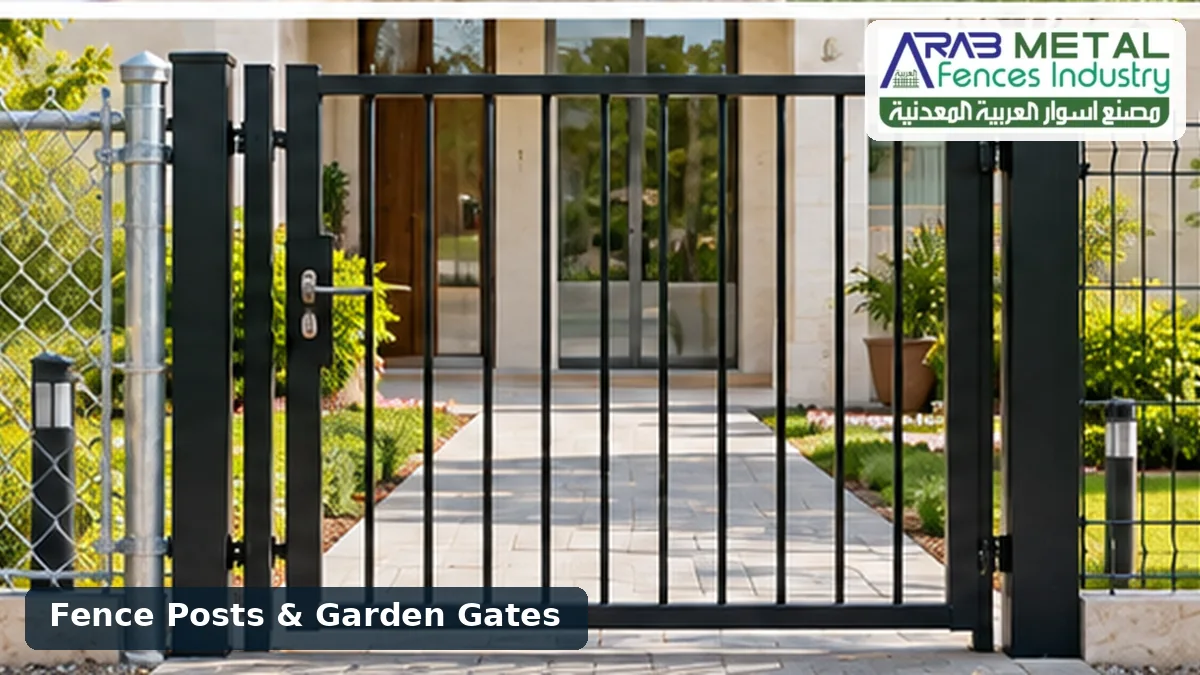
Plan Your Garden Gates
Gate locations should reflect the way residents, visitors and equipment move through the garden.
Before requesting a quotation, identify:
- The number of required gates.
- Preferred opening widths.
- Gate positions along the boundary.
- Required opening directions.
- Compatible supporting posts.
- Hinges, latches and other hardware.
- Any requirements related to children or pets.
Arab Fences publishes compatible gate options for its chain link fencing system. Exact configurations should be confirmed for the selected project.
Review Foundations and Site Conditions
Posts, connections and foundations must suit the actual fence dimensions and site exposure.
Sloping ground, existing walls, wind conditions and other site factors may affect the final supporting arrangement.
Where engineering assessment or local approvals apply, these should be addressed before finalizing the design.
Need a complete garden fencing system? Contact Arab Fences with your preferred fence height, post requirements and gate details.
Step 5: Evaluate Privacy, Airflow and Garden Conditions
Garden fence selection should balance appearance with the practical conditions of the property.
A fence that suits one outdoor area may not be the best choice for another.
Understand the Difference Between a Boundary and a Privacy Fence
Open mesh fencing defines a boundary while generally allowing people to see through it.
It should not automatically be described as a high-privacy or anti-climb system.
Solid and suitably screened panels may provide greater visual privacy, but the result depends on their openings, height, orientation and surrounding views.
Balance Privacy and Airflow
Open mesh generally allows more air to pass through than solid panels.
However, actual airflow also depends on neighboring buildings, vegetation, wind direction and the overall property layout.
For gardens with outdoor seating areas, screening selected locations may be more practical than enclosing the entire garden with solid fencing.
Review Wind Exposure
Solid and heavily screened panels may experience different wind loads from open mesh systems.
The posts, connections and foundations should therefore be suitable for the selected configuration and location.
Consider Children and Pets
Where children or pets use the garden, assess the complete fence and gate arrangement.
Review mesh openings, gaps near ground level, projections, gate hardware and the intended users’ needs.
No ordinary garden fence should automatically be described as childproof, escape-proof or impossible to climb.
Coordinate the Fence with Landscaping
Consider how the fence will look beside plants, pathways, existing walls and outdoor seating areas.
An open metal boundary may preserve views of the garden, while a suitably screened section can reduce visibility where privacy is needed.
Step 6: Prepare Your Garden Fence Quotation Checklist
The final step in learning how to choose a garden fence is preparing the information needed for an accurate enquiry.
A clear request helps suppliers understand the intended system, required components and commercial scope.
What Information Should You Provide?
| Requirement | Information to Provide |
|---|---|
| Project Location | City and site location in Saudi Arabia |
| Fence Purpose | Boundary, privacy, decoration or another intended use |
| Boundary Length | Measured length of each section |
| Preferred Height | Required or approximate fence height |
| Fence System | 3D welded mesh, chain link or another confirmed option |
| Material Details | Wire diameter or section dimensions, if known |
| Protective Finish | Preferred coating and colour |
| Gate Details | Quantity, position and opening widths |
| Site Conditions | Slopes, corners, existing walls and access restrictions |
| Supporting Documents | Drawings, sketches or site photographs |
| Commercial Scope | Supply, delivery or additional requested services |
How to Compare Garden Fence Quotations
Do not compare offers based only on the price per metre.
Check whether each quotation includes the same fencing system, dimensions, wire specifications, protective finish, supporting posts, connections, gates, accessories and delivery arrangements.
Installation or other services should only be treated as included when explicitly stated in the offer.
What Affects Garden Fence Costs?
Garden fence costs depend on the selected system, total length, height, material specifications, protective finish, supporting components, gates and site conditions.
Project location and agreed supply or service scope may also influence the final quotation.
There is no single price that accurately represents every garden fencing configuration.
Ready to request a quotation? Send Arab Fences your garden dimensions, location and preferred specifications.
Common Mistakes to Avoid When Choosing a Garden Fence
Even an attractive fence can be unsuitable if important requirements are overlooked.
Choosing Appearance Before Function
A decorative fence may not provide the visual screening required around an outdoor seating area. Identify the main purpose before selecting a design.
Estimating Instead of Measuring
Rough measurements can lead to inaccurate quantities and incomplete quotations. Measure each boundary section and identify all gate openings.
Confusing Materials with Coatings
Chain link and welded mesh describe fencing systems. Galvanizing and polymer coating describe protective finishes.
Assuming Galvanized Steel Is Always Stronger
Structural suitability depends on the complete fence specification. Galvanizing primarily protects steel against corrosion.
Ignoring Posts and Gate Components
A fence cannot be assessed based on panels alone. Supporting posts, connections, foundations and gates are essential parts of the complete system.
Overlooking Wind and Ground Conditions
Exposure, slopes and existing structures can affect the appropriate arrangement and supporting requirements.
Assuming All Metal Fences Provide Privacy
Open mesh generally allows visibility. Greater screening requires an appropriately designed system.
Comparing Prices Without Matching Specifications
Different quotations may include different materials, coatings, components and services. Compare the complete supply scope before making a decision.
Why Consider Arab Fences for Your Garden Fencing Project?
Arab Fences is a Saudi manufacturer of metal fencing systems with published product information for 3D welded mesh, chain link and other perimeter fencing applications.
For suitable garden projects, customers can review documented systems and request information based on the intended application, preferred dimensions and required protective finish.
Documented Metal Fencing Systems
Arab Fences publishes specifications for selected mesh fencing systems, helping customers identify relevant panel or wire configurations.
Compatible Components
Published product details include information about supporting posts, accessories and selected gate configurations.
Project-Based Product Selection
Customers can prepare an enquiry covering the boundary layout, selected system, coating preferences, gate openings and other relevant project details.
Specific designs, finishes and services should be confirmed before ordering.
Request a Clear Quotation
Providing accurate dimensions and a well-defined specification helps establish the requested fencing and commercial scope.
Contact Arab Fences to Discuss Your Garden Fencing Requirements and request information about suitable products.
Frequently Asked Questions About Choosing a Garden Fence
1. How Do I Choose the Right Fence for My Garden?
Start by defining the intended purpose, measuring the garden boundary, comparing suitable systems, selecting a protective finish and planning posts and gates. Then request a quotation based on the complete requirements.
2. What Measurements Are Needed for a Garden Fence?
Measure each boundary section, the preferred height and gate openings. Record corners, slopes and any existing structures that may affect the layout.
3. Which Garden Fence Is Better for Privacy?
Solid or suitably screened designs generally offer more visual privacy than open mesh. The result also depends on viewing angles, fence height and neighboring properties.
4. What Is the Difference Between Welded Mesh and Chain Link?
Welded mesh consists of wires joined at their intersections to form structured panels. Chain link uses interwoven steel wires forming a relatively flexible diamond-patterned mesh.
5. Does Galvanizing Make a Steel Fence Stronger?
Galvanizing primarily provides corrosion protection. Structural strength depends on the underlying steel components and complete system design.
6. How Do I Choose the Right Garden Fence Height?
Consider the intended use, site layout, neighboring views, selected fence design and applicable requirements. There is no universal height suitable for every garden.
7. What Should I Consider When Selecting Fence Posts?
Check compatibility with the fencing system, required dimensions, spacing, connections, foundations and site conditions. Gate and corner posts may require different specifications.
8. How Do I Plan Garden Gate Openings?
Identify the number of gates, required clear widths, opening directions, supporting posts and suitable hardware. Make sure the arrangement supports the intended use.
9. What Affects Garden Fence Costs in Saudi Arabia?
Costs depend on the fence system, dimensions, material specifications, protective finish, supporting components, gates, site conditions and agreed commercial scope.
10. What Should I Send for a Garden Fence Quotation?
Provide your project location, boundary measurements, preferred height, fencing system, coating preferences, gate requirements and available drawings or photographs.
Choose the Right Garden Fence with Arab Fences
Understanding how to choose a garden fence helps you make an informed decision based on practical requirements rather than appearance or initial price alone.
Measure your boundary, identify its purpose, compare suitable metal fencing systems and choose appropriate protective finishes. Then review the posts, gates, site conditions and complete quotation scope.
Arab Fences manufactures metal fencing systems in Saudi Arabia and publishes product information to support customer enquiries.
Request a Garden Fence Quotation from Arab Fences and share your project dimensions, preferred design, protective finish and gate requirements.