
Looking for a steel garden fence that combines a defined boundary, attractive appearance and practical outdoor use? Steel fencing offers different configurations, from open welded mesh and chain link to more screened metal designs. However, choosing the right system requires more than selecting a panel style.
A suitable steel garden fence depends on its components, protective finish, supporting posts, gates and site conditions. Ordinary steel can corrode, while open mesh and solid panels provide different levels of visibility and airflow.
Arab Fences manufactures metal fencing systems in Saudi Arabia, including documented 3D welded mesh and chain link products. This guide explains how steel garden fencing works, how to protect it from corrosion and what to consider before requesting a quotation.
Planning a residential garden boundary? Contact Arab Fences to discuss available steel fencing specifications and request a tailored quote.
Steel Garden Fence: What Makes It a Practical Choice?
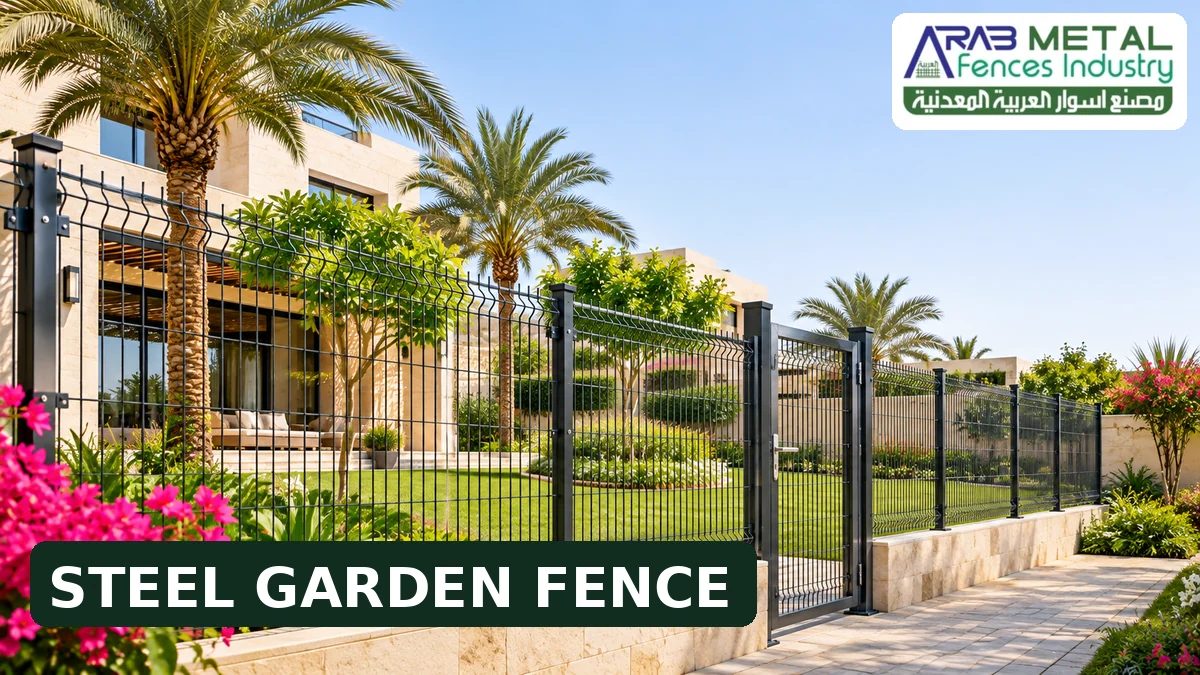
A steel garden fence uses steel mesh, panels or other metal elements to define the boundary of a garden or outdoor area. Different constructions provide different levels of visibility, screening and architectural appearance.
Steel can be formed into rigid panels, woven mesh or other configurations. Its suitability depends on the complete specification, including the underlying metal, component dimensions, connections and supporting structure.
Clear Garden Boundary Definition
Open metal fencing can separate a garden from surrounding areas while preserving views of the landscape. This may suit residential gardens, pathways and landscaped boundaries where an enclosed appearance is not required.
Different Design Configurations
Welded mesh, chain link and solid panels are not interchangeable. Their construction, openings and supporting components differ, influencing visibility, airflow and project requirements.
Suitable Protective Finishes
Steel can corrode when exposed to moisture and environmental conditions. Galvanizing and compatible coating systems help reduce corrosion risk, but the level of protection depends on the product specification and exposure.
Complete System Performance
A suitable steel fence includes more than the visible mesh or panels. Posts, connections, gates and foundations must be compatible with the selected arrangement and site conditions.
Understanding Steel Garden Fence Components
Before choosing a steel garden fence, it is useful to understand how its individual components function.
This helps homeowners compare products accurately and avoid ordering panels without the supporting accessories required for a complete boundary.
Steel Mesh and Fence Panels
The mesh or panel forms the main visible section of the fence. Welded mesh uses steel wires joined at their intersections, while chain link uses interwoven wires forming diamond-shaped openings.
Panel dimensions, wire diameter, mesh opening and material specification affect the selected system’s suitability.
Steel Fence Posts
Posts support the fencing system. Their profiles, dimensions, spacing and foundations depend on the chosen fence, height and site conditions.
Corner, terminal and gate posts may have different requirements from intermediate posts.
For additional guidance, explore our article about types of fence posts and their applications.
Rails and Supporting Members
Some steel fencing systems use horizontal rails or other members for support. Their function and configuration depend on the design.
Not every welded mesh or chain link system requires the same rail arrangement.
Clamps, Brackets and Connections
Fixed panels are attached to their supporting posts using compatible connections. Depending on the system, these may include clamps, brackets, bolts or other specified accessories.
Connections should follow the requirements of the selected fencing system.
Garden Gates and Hinges
Gates provide access through the boundary and may require dedicated posts, hinges, latches and additional hardware.
Hinges are used for suitable gate assemblies, not as the normal means of connecting fixed fence panels. Fixed panels use their specified post connections.
Foundations and Ground Conditions
The required supporting arrangement depends on the fence dimensions, loads, exposure and ground conditions.
Slopes, corners and existing structures may influence the final design. Engineering review or local approval requirements should be addressed where applicable.
Need compatible fence panels, posts and gates? Send Arab Fences your project dimensions and required components for a quotation.
Open Mesh vs. Solid Steel Garden Fence Panels
One of the main differences between steel garden fencing systems is the amount of open space within the boundary.
Open mesh generally preserves visibility and airflow, while solid or screened designs may reduce direct views into the garden.
Welded Mesh Steel Fencing
Welded mesh consists of intersecting steel wires joined together to form a structured grid. It is commonly supplied as rigid panels with compatible posts and connections.
Arab Fences manufactures 3D welded mesh fencing systems with published options for panel dimensions, mesh openings, wire sizes and protective finishes.
For suitable garden projects, this system may provide a defined boundary while maintaining views of the surrounding landscape.
Ordinary open welded mesh should not automatically be described as a high-privacy or certified anti-climb system.
Chain Link Steel Fencing
Chain link consists of interwoven steel wires forming diamond-shaped openings. Its woven fabric is relatively flexible compared with rigid welded mesh panels.
Arab Fences supplies chain link fencing systems with different mesh configurations and protective finishes.
Chain link may be considered for outdoor boundaries where maintaining visibility is acceptable. Conventional open chain link does not provide complete visual privacy.
Steel Bar and Partially Screened Designs
Metal bars and partially screened panels offer different appearances depending on their spacing and orientation.
Visual privacy and airflow depend on the size and arrangement of openings. A closely spaced design may reduce views, but it does not automatically form a solid privacy barrier.
Specific decorative configurations should be confirmed with the supplier before ordering.
Solid Steel Fence Panels
Solid steel panels provide greater visual screening directly through their surface than open mesh fencing.
They may be considered for selected garden seating areas or outdoor spaces where privacy is a priority.
However, solid panels can experience different wind forces from open mesh systems. Posts, connections and foundations must suit the actual configuration and site exposure.
Solid panel availability through Arab Fences must be confirmed directly.
Steel Garden Fence Comparison
| Fence Design | Visual Privacy | Airflow | Main Consideration |
|---|---|---|---|
| 3D Welded Mesh | Low | Generally high | Rigid open mesh panels |
| Chain Link | Low | Generally high | Flexible woven mesh |
| Vertical Metal Bars | Low to moderate | Generally good | Spacing and appearance |
| Partially Screened Panels | Variable | Variable | Opening size and orientation |
| Solid Steel Panels | High through panel surface | Limited through panel | Privacy and wind exposure |
This comparison describes general design characteristics rather than certified performance ratings or confirmation of product availability.
Which Steel Garden Fence Should You Choose?
For an open garden boundary, a suitable welded mesh or chain link system may be appropriate. Where visual screening is important, a more enclosed configuration may be considered.
The correct choice depends on the property layout, viewing angles, intended use and complete product specification.
Comparing steel garden fencing options? Ask Arab Fences about available mesh designs, coatings and compatible components.
Steel Garden Fence Applications for Outdoor Spaces
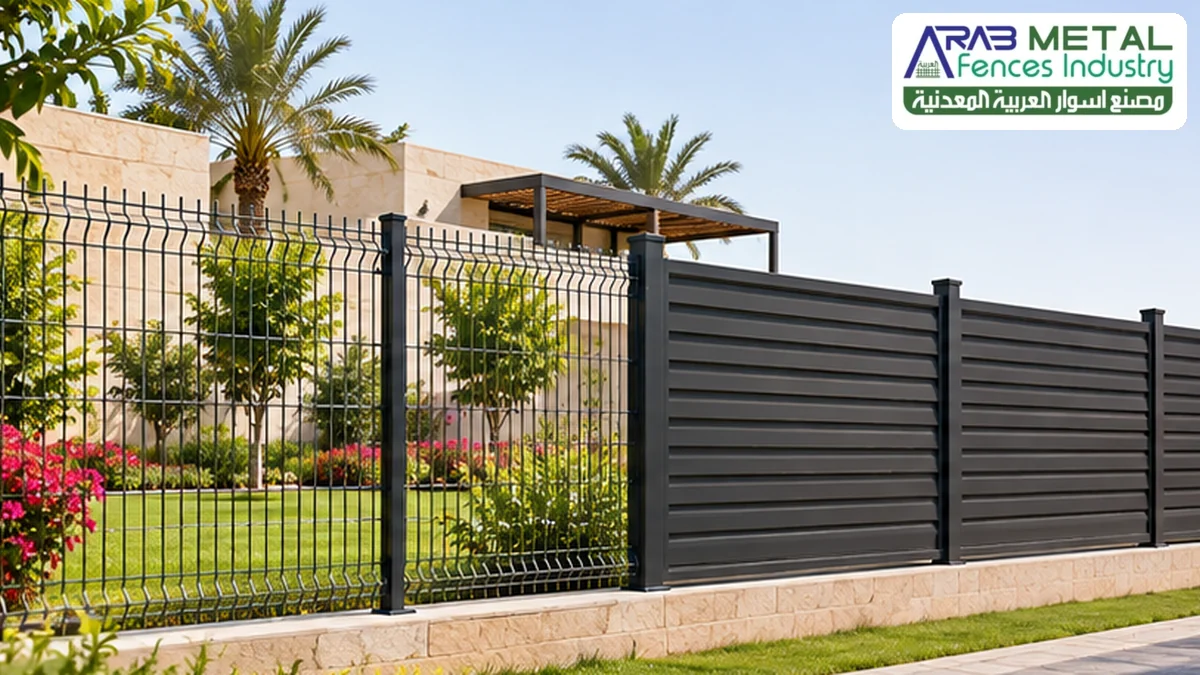
Different sections of a residential property may require different fencing characteristics.
Residential Garden Boundaries
Open steel mesh fencing may provide a clearly defined perimeter while maintaining visibility through the boundary.
Panel dimensions, mesh openings and protective finishes should suit the selected application.
Outdoor Seating Areas
Where neighboring properties overlook a seating area, visual screening may be important.
Consider the actual viewing angles and the position of seating before selecting a more enclosed fence arrangement.
Decorative Landscape Sections
Open steel fencing can define pathways, planting zones and outdoor spaces without blocking views of surrounding greenery.
Choose a panel appearance and finish that complement the property’s landscaping.
Children’s Play Areas
Fencing around children’s areas requires attention to openings, ground gaps, projections, gates and applicable safety requirements.
No ordinary steel garden fence should automatically be described as childproof or impossible to climb.
Pet-Friendly Gardens
Fence suitability depends on the animal’s size and behavior. Review the height, mesh openings, ground clearance and gate gaps.
Garden Entrances
Matching gates can create a consistent appearance when compatible configurations are available.
The gate should also provide suitable access and meet its operating requirements.
How Are Steel Garden Fences Supported?
Steel fencing should be evaluated as a complete system rather than a collection of individual panels.
Supporting details depend on the fence construction, dimensions, local conditions and intended application.
Posts and Foundations
Posts transfer relevant forces from the fencing into the supporting arrangement.
Post dimensions, spacing and foundations should correspond to the selected system and expected site conditions.
Fixed Panel Connections
Rigid welded mesh panels are secured to compatible posts through specified connections.
Chain link fencing may use different arrangements, including fabric attachments and tensioning components.
Gate Hardware
Hinges, latches and other operating hardware form part of suitable gate assemblies.
Gate posts and clearances should be selected for the intended opening and operation.
Wind and Site Exposure
Open and solid fence designs can experience different wind forces.
The selected supporting system should reflect the actual design, ground conditions and environmental exposure.
Corrosion Protection for Steel Garden Fencing
Corrosion protection is an important consideration when selecting a steel garden fence, particularly where the fence will remain exposed to outdoor conditions throughout the year.
Ordinary carbon steel can corrode. A suitable protective finish helps reduce deterioration but does not mean every steel component is permanently rustproof.
Why Can Steel Garden Fences Rust?
Steel corrosion can occur when the metal is exposed to moisture and other environmental conditions.
Airborne salts, coating damage, trapped moisture and local exposure may influence the rate of deterioration.
Coastal properties may experience different corrosion conditions from sheltered inland gardens.
What Is Galvanized Steel Fencing?
Galvanizing applies zinc protection to steel to help reduce corrosion.
Hot-dip galvanizing involves immersing suitably prepared steel in molten zinc to form a protective coating.
The coating protects the steel through barrier and sacrificial protection mechanisms. Its service performance depends on coating specifications and environmental exposure.
Galvanizing is not the same as hot rolling and does not automatically increase the structural strength of the fence.
For further information, see the American Galvanizers Association guidance on galvanized steel field inspection.
Painted and Polymer-Coated Steel
Painted and polymer-coated finishes may offer different appearance options and corrosion protection characteristics depending on the product specification.
The selected coating should be compatible with the steel product and expected environment.
Arab Fences publishes galvanization, polyester coating and PVC coating as surface treatments for its 3D welded mesh fencing system.
Does Galvanized Steel Require Maintenance?
Galvanized steel can provide long-term corrosion protection, but the protective coating may still require inspection and maintenance depending on exposure and condition.
Damaged or previously repaired areas can require particular attention.
What Should You Do If Rust Appears?
If visible corrosion develops, identify the affected location and assess its extent.
Discoloration is not always proof of serious structural corrosion, and the appropriate response depends on the actual condition and coating system.
For significant corrosion, damage or uncertainty about suitable repairs, seek qualified technical assessment.
Repairs should follow the relevant product and coating specifications rather than relying on an unsuitable general-purpose paint.
Looking for a galvanized steel garden fence? Contact Arab Fences to confirm the available coatings and product specifications.
Steel Garden Fence Maintenance Checklist
Routine inspection can help identify visible damage, coating problems and issues affecting the complete fencing system.
The appropriate inspection frequency depends on the environment, coating specification and product condition.
1. Inspect the Protective Coating
Look for scratches, peeling, damaged finishes and exposed metal, especially around areas affected by impacts or maintenance activities.
2. Check for Corrosion
Look for rust staining or other signs of deterioration. Where corrosion is suspected, assess the condition rather than assuming every discoloration has the same cause.
3. Examine Fence Posts
Inspect posts for visible damage, movement or problems near the supporting bases.
4. Review Connections
Check for loose, missing or damaged clamps, brackets and other specified fasteners.
5. Check Gate Operation
Inspect hinges, latches, alignment and opening clearances. Gates that drag or fail to latch correctly may require attention.
6. Manage Vegetation Around the Fence
Maintain access to fencing components so that coating damage, corrosion and connection issues remain visible during inspection.
7. Use Suitable Cleaning Methods
Follow the recommendations for the selected finish. Avoid aggressive cleaning products unless their compatibility is confirmed.
8. Record Maintenance Issues
Photographs and inspection notes can help track recurring problems and communicate maintenance needs.
Practical Steel Fence Inspection Table
| Component | What to Inspect | Purpose |
|---|---|---|
| Protective Coating | Scratches, peeling and exposed steel | Identify coating damage |
| Mesh or Panels | Visible deformation and deterioration | Review panel condition |
| Fence Posts | Damage, movement and base condition | Review supporting components |
| Connections | Loose or missing fasteners | Check system connections |
| Gate Hardware | Hinges, latches and alignment | Maintain suitable operation |
| Surrounding Ground | Visible changes near posts | Identify potential support issues |
This checklist is general guidance and does not replace a product-specific inspection or engineering assessment.
What Affects Steel Garden Fence Costs in Saudi Arabia?
The price of a steel garden fence depends on the selected system, materials, dimensions and complete project scope.
Comparing a panel-only price with a quotation that includes posts, gates and additional services can be misleading.
Main Cost Factors
- Fence system: Welded mesh, chain link or another confirmed configuration.
- Steel specification: Wire diameter, metal section dimensions and panel construction.
- Fence dimensions: Total length and required height.
- Protective finish: Galvanizing, polyester coating, PVC coating or another specified system.
- Posts and connections: Compatible supporting components and accessories.
- Gates: Required openings, dimensions, configuration and hardware.
- Site conditions: Corners, slopes, ground conditions and environmental exposure.
- Commercial scope: Supply, delivery and any separately agreed services.
Steel Garden Fence Quotation Checklist
Prepare these details before contacting a supplier:
- Project location in Saudi Arabia.
- Total boundary length and preferred fence height.
- Intended use of the fencing system.
- Preferred mesh or panel configuration.
- Required visual privacy level.
- Preferred protective finish and colour.
- Gate quantity, location and dimensions.
- Available sketches, measurements or site photographs.
- Relevant site and ground conditions.
- Required supply, delivery or additional service scope.
Where a technical specification is unknown, share the available information and ask the supplier to clarify appropriate options.
Ready to compare steel garden fence prices? Request a project-specific quotation from Arab Fences.
Common Steel Garden Fence Mistakes to Avoid
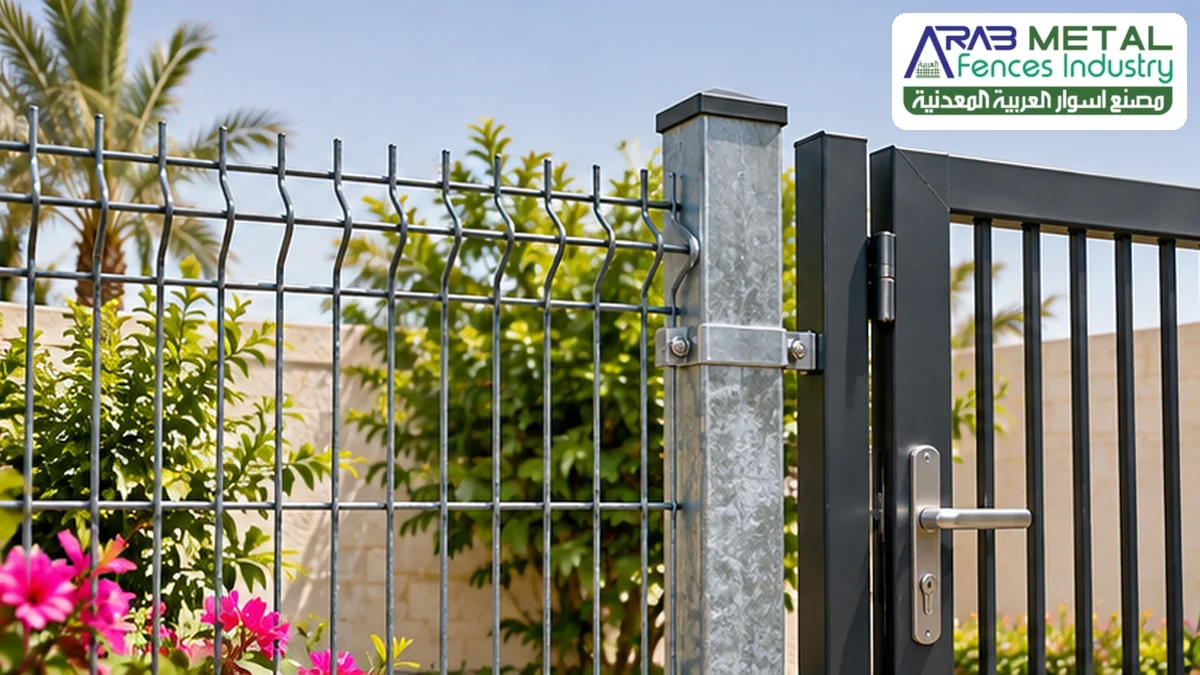
Choosing a steel boundary without reviewing its full specification can lead to unsuitable product selection or maintenance expectations.
Assuming Steel Cannot Rust
Ordinary carbon steel can corrode. Select suitable protective finishes for the material and site conditions.
Confusing Galvanizing with Structural Strength
Galvanizing primarily protects against corrosion. Structural suitability depends on the steel components and complete system design.
Assuming All Steel Fences Provide Privacy
Open mesh and chain link generally allow visibility. Greater visual screening requires an appropriately designed arrangement.
Using Gate Hinges as Fixed Panel Connections
Hinges are associated with suitable gate assemblies. Fixed fence panels require specified connections to supporting posts.
Ignoring Posts and Foundations
Panels cannot be evaluated independently of their supporting components. Posts and foundations must suit the selected system and site conditions.
Overlooking Coating Maintenance
Protective finishes can require inspection, particularly when damaged or exposed to demanding environments.
Comparing Prices Without Matching Specifications
Quotations may differ in materials, coatings, accessories and commercial scope. Compare the complete system before deciding.
Why Consider Arab Fences for Steel Garden Fencing?
Arab Fences manufactures metal fencing systems in Saudi Arabia and publishes product information for different perimeter applications.
Its documented range includes 3D welded mesh and chain link fencing systems with relevant material and configuration options.
Documented Metal Fencing Products
Customers can explore published mesh fencing systems and review their relevant characteristics before submitting an enquiry.
Product Specifications and Finishes
Available technical information includes selected mesh openings, wire dimensions, panel configurations, supporting components and protective finishes.
Consider the Complete Fence System
Customers should account for posts, connections, gates and site requirements alongside the selected steel mesh or panels.
Confirm Available Designs
Decorative solid panels, specialized screening systems and particular gate finishes should not be assumed available without direct confirmation.
Customers can share reference images and specifications to clarify the options relevant to their project.
Contact Arab Fences to Discuss Your Steel Garden Fence Requirements and request available product information.
Frequently Asked Questions About Steel Garden Fences
1. Can a Steel Garden Fence Rust?
Yes. Ordinary carbon steel can corrode when exposed to moisture and other environmental conditions. Suitable protective finishes help reduce corrosion risk.
2. What Is the Difference Between Steel Mesh and Solid Fence Panels?
Open steel mesh allows visibility and generally permits airflow. Solid panels provide greater visual screening directly through their surface but may experience different wind forces.
3. Does a Steel Mesh Fence Provide Privacy?
Conventional open mesh provides limited visual privacy. Greater screening depends on the selected arrangement, viewing angles and property layout.
4. What Components Support a Steel Garden Fence?
Depending on the system, supporting components may include posts, rails, clamps, brackets, tensioning accessories and foundations.
5. Are Hinges Used to Connect Steel Fence Panels?
Hinges are used for suitable gate assemblies. Fixed panels are secured through their specified connections and supporting posts.
6. What Is the Purpose of Galvanizing Steel Fencing?
Galvanizing applies zinc to help protect steel against corrosion. Its performance depends on the coating specification and environmental exposure.
7. How Often Should a Steel Garden Fence Be Inspected?
Inspection frequency depends on the product, coating condition and environment. Follow relevant manufacturer guidance and inspect sooner when visible damage occurs.
8. Can Steel Garden Fencing Include Matching Gates?
Compatible gates may be available for selected systems. Confirm the dimensions, supporting posts, hardware and finish with the supplier.
9. What Affects Steel Garden Fence Costs?
Costs depend on the fence system, dimensions, material specifications, coatings, posts, gates, site conditions and agreed commercial scope.
10. What Information Is Needed for a Steel Garden Fence Quotation?
Provide your location, boundary measurements, preferred fence type, protective finish, gate requirements and available drawings or site photographs.
Choose a Steel Garden Fence That Suits Your Property
A suitable steel garden fence should balance appearance, boundary definition, visual privacy and long-term maintenance requirements.
Open welded mesh and chain link can preserve visibility, while more screened designs may be considered where reducing direct views is important. Whatever the design, select appropriate posts, connections, gates and corrosion protection for the complete system.
Arab Fences manufactures metal fencing systems in Saudi Arabia and provides product information to support customer enquiries.
Request a Steel Garden Fence Quotation from Arab Fences and share your project dimensions, preferred system, coating requirements and gate details.