
Temporary Barrier Fence: Uses and Key Benefits
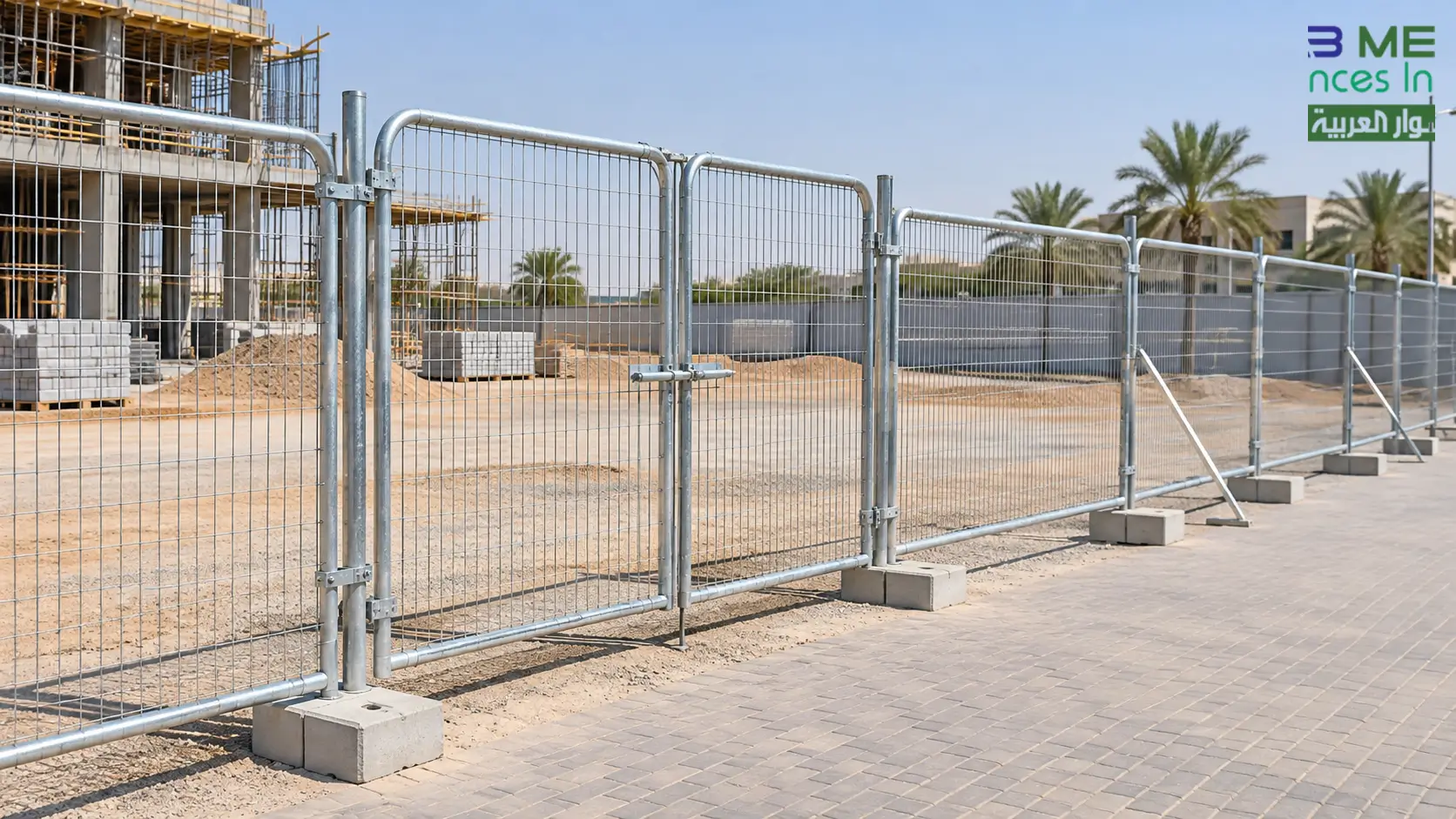
A temporary barrier fence typically consists of interconnected steel mesh panels supported by portable concrete or rubber bases. Its modular design allows the fence line to be dismantled, relocated, or rearranged as project requirements change.
The system establishes a visible physical boundary and can help separate work activities from surrounding areas. Open welded mesh provides visibility through the fence, which may be useful for site supervision and outdoor operations.
However, standard temporary mesh fencing should not automatically be treated as a high-security barrier, a crowd-pressure barrier, or a vehicle-impact protection system. The selected product must suit the intended application and site conditions.
Common Applications
- Construction sites: Defining work perimeters and separating active construction areas.
- Outdoor events: Establishing backstage boundaries, service areas, and controlled access points.
- Gardens and landscaping: Separating renovation, planting, and maintenance zones.
- Commercial properties: Creating temporary boundaries during repairs and modifications.
- Public facilities: Identifying restricted maintenance areas where suitable temporary fencing is required.
Planning a temporary site boundary? Contact Arab Fences to discuss the required panels and accessories.
Main Components of a Temporary Barrier Fence
The performance of a temporary fencing system depends on its complete assembly. Panels, supporting feet, clamps, bracing, and gates each perform a different function.
Galvanized Steel Panels and Welded Mesh
Temporary fencing panels generally consist of a tubular steel frame with welded wire mesh. The frame provides structural support, while the mesh establishes a visible physical boundary.
Galvanizing helps protect steel against corrosion, although the level of protection depends on the coating specification and environmental conditions.
Concrete and Rubber Bases
Portable bases support the panels without requiring a continuous fixed foundation. Arab Fences publishes concrete and rubber base options for its temporary fencing systems.
The appropriate base depends on panel dimensions, ground conditions, anticipated loads, and the complete installation design. Base weight alone does not establish stability in every environment.
Panel Clamps and Connectors
Clamps connect adjacent panels to form a continuous fence line. Compatible connectors help maintain the intended alignment and assembly. Their type and placement should follow the selected system requirements.
Bracing and Support Pipes
Bracing provides additional support where required by the approved design. Brace pipes may be necessary in exposed locations or where environmental conditions create additional loads.
The need for bracing should be assessed according to fence geometry, ground conditions, wind exposure, and manufacturer guidance.
Temporary Fence Gates
Gates provide controlled access for authorized workers, visitors, and equipment. Arab Fences describes single- and double-leaf gate arrangements, including swinging and sliding options.
The correct gate configuration depends on the required opening width, available space, and intended traffic.
Explore the temporary fence product range for additional information about panels and accessories.
Temporary Barrier Fence Specifications
Technical specifications help project teams compare fencing options and prepare accurate procurement requirements. The following dimensions and components are published within the Arab Fences temporary fencing range.
| Component | Published Specification |
|---|---|
| Standard panel size | 2 m high × 3.5 m wide |
| Frame pipe diameter | 33 mm |
| Frame wall thickness | 1.5 mm or 1.8 mm |
| Welded mesh wire diameter | 3 mm, 4 mm, or 5 mm |
| Mesh openings | 50 × 100 mm, 50 × 200 mm, or 100 × 200 mm |
| Supporting bases | Concrete or rubber |
| Connections | Panel clamps |
| Additional support | Brace pipes |
| Gate arrangements | Single- or double-leaf, swinging or sliding |
These specifications represent published product options. Availability, compatibility, coating requirements, and suitability for a particular project should be confirmed before ordering.
Can Temporary Fence Height Be Adjusted?
Modular fencing allows the overall boundary layout to change, but individual panel height is not necessarily adjustable. Arab Fences publishes a standard panel height of 2 meters.
Alternative dimensions or modifications should be confirmed directly with the supplier. Panels should not be stacked or extended without an appropriate approved design.
Have a project specification or BOQ? Request a quotation from Arab Fences based on your required dimensions and components.
Construction Sites vs. Outdoor Events: Choosing the Right Setup
Temporary fencing can be used in different environments, but construction projects and public events have distinct access and safety requirements.
| Consideration | Construction Sites | Outdoor Events |
|---|---|---|
| Main purpose | Define work boundaries | Separate designated event areas |
| Access requirements | Workers, deliveries, equipment | Visitors, staff, service access |
| Ground conditions | May include uneven or changing surfaces | May include paved or landscaped areas |
| Main risks | Work hazards and equipment movement | Crowd behavior and emergency access |
| Additional planning | Work phases and controlled entrances | Pedestrian routes and crowd management |
Temporary Fencing for Construction Sites
Construction fencing helps identify the boundary between active work areas and surrounding spaces. The layout should account for deliveries, equipment movement, excavations, changing work zones, and public access.
Where a specific security performance is required, the selected fence should be evaluated against that requirement rather than assumed to prevent unauthorized entry under all conditions.
Temporary Fencing for Outdoor Events
At outdoor events, modular panels can help define backstage areas, service zones, and temporary perimeters. However, ordinary mesh panels should not automatically be used where significant crowd pressure is expected.
Specialist crowd barriers may be required depending on the event risk assessment. Pedestrian circulation, emergency exits, and accessible routes must also be considered.
Choosing Fence Bases and Bracing for Stability
Temporary fence stability depends on the complete installation rather than the weight of its bases alone. Ground conditions, fence layout, wind exposure, and additional attachments must all be considered.
Ground Conditions
Concrete, asphalt, compacted soil, slopes, and uneven terrain may require different support arrangements. Portable bases must be compatible with the panels and suitable for the intended surface.
Wind Exposure
Open mesh allows airflow, but temporary fencing can still experience significant wind forces. Exposed sites, corners, and long fence runs may require additional assessment.
Banners and Privacy Screens
Adding solid banners, advertising materials, or privacy screening can substantially increase wind loads. A fence suitable for open mesh may no longer be appropriate after screening is attached.
When Is Additional Bracing Required?
Bracing may be required depending on manufacturer guidance, fence height, site conditions, and anticipated loads. There is no universal brace spacing suitable for every installation.
Inspection and Maintenance
Temporary fencing should be inspected as appropriate for the site, particularly after severe weather, accidental impact, or layout changes. Checks should include displaced bases, damaged panels, loose clamps, unstable supports, and blocked access points.
For additional guidance, consult the UK Health and Safety Executive guidance on event barriers.
Installing fencing in an exposed outdoor area? Discuss your site conditions with Arab Fences before selecting the system.
Temporary Barrier Fence vs. Crowd Control and Vehicle Barriers
Different barrier systems perform different functions. Choosing the wrong product can create unnecessary safety risks.
| Barrier Type | Primary Function | Important Limitation |
|---|---|---|
| Temporary mesh fence | Defines temporary boundaries | Not automatically rated for crowd pressure or vehicle impact |
| Crowd control barrier | Organizes pedestrian movement | Suitability depends on the barrier and expected crowd loads |
| Vehicle safety barrier | Provides specified vehicle containment | Requires appropriate impact performance and design |
Can Temporary Fencing Control Crowds?
Temporary mesh panels may help separate event areas, but they should not automatically be used where spectators may push, surge, or apply significant pressure.
Locations exposed to substantial crowd loads require barriers selected and assessed for those conditions.
Can a Temporary Barrier Fence Stop Vehicles?
A standard temporary mesh fence should not be relied upon to stop an impacting vehicle. Where vehicle containment is required, an appropriately specified and tested vehicle safety barrier is necessary.
For another modular fencing approach, read about Heras fence systems and applications.
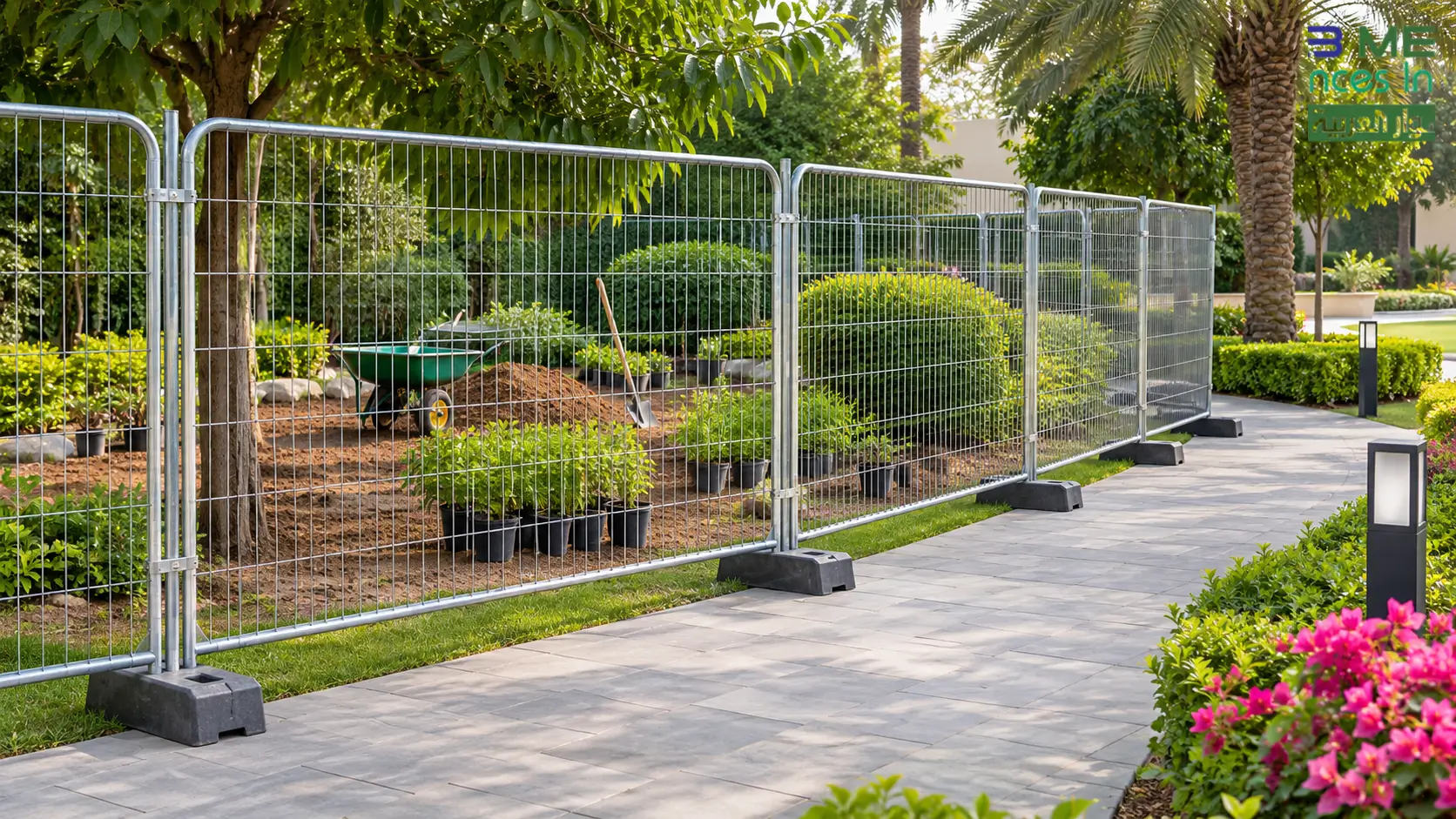
Temporary Barrier Fencing for Gardens and Outdoor Areas
Gardens, landscaped areas, and outdoor properties may need temporary boundaries during maintenance, renovation, planting, or construction.
Modular fencing can help separate paving work, irrigation maintenance, planting zones, and other activities from surrounding spaces.
Before selecting a system, consider the available space, surface conditions, pedestrian access, appearance, and intended duration.
A large construction-style panel may not be suitable for every small garden. The chosen fence should match the actual requirements of the location.
Temporary fencing should not be assumed suitable as a swimming pool safety barrier or for other regulated protective applications without specific compliance evidence.
How to Calculate Temporary Fence Panels
Estimating material quantities begins with the total length of the required fence line.
Estimated panel quantity = Total fence length ÷ Effective panel width
Example: A 70-Meter Fence Line
For a straight boundary measuring 70 meters, using the published nominal panel width of 3.5 meters:
70 ÷ 3.5 = 20 panels
This provides an initial estimate of 20 panels.
The final quantity may differ because of actual effective panel width, connectors, gates, corners, and changes in direction.
What Else Should Be Included?
- Compatible supporting bases.
- Panel clamps and connectors.
- Bracing components where specified.
- Access gates.
- Components required at corners and terminations.
Material quantities should follow the selected system requirements rather than assumed universal component ratios.
Have your site measurements ready? Send your layout to Arab Fences to discuss the required fencing materials.
What Affects Temporary Barrier Fence Prices?
Temporary barrier fence prices depend on the selected materials, panel configuration, accessories, order quantity, and project requirements.
Panel Dimensions and Steel Thickness
Panel size, frame tube dimensions, and steel thickness influence the material specification.
Mesh Wire Diameter and Openings
Different wire diameters and mesh openings affect the configuration and material requirements.
Galvanization Requirements
The specified corrosion-protection coating may affect the product configuration and quotation.
Bases, Clamps, Bracing, and Gates
Supporting components and access arrangements contribute to the complete material scope.
Order Quantity and Project Location
Required quantities, delivery destination, and commercial arrangements may influence the final quotation.
When comparing suppliers, ensure that each quotation covers the same specifications and accessories. A panel-only price may not represent the complete fencing system cost.
Why Choose Arab Fences for Temporary Fencing?
Arab Fences publishes several product characteristics that help buyers compare temporary fencing configurations and prepare procurement requirements.
- Locally manufactured temporary fencing: The company identifies its temporary fencing panels as locally manufactured.
- Published standard panel dimensions: A 2 m × 3.5 m configuration provides a starting point for planning.
- Multiple mesh wire options: The product information lists 3 mm, 4 mm, and 5 mm wire diameters.
- Different mesh opening sizes: Several opening configurations are published for technical comparison.
- Galvanized steel frame options: Frame dimensions and wall thickness options are identified.
- Portable bases and accessories: Concrete bases, rubber bases, clamps, and brace pipes are included in the product range.
- Gate configurations: Single- and double-leaf arrangements are described.
These are published product characteristics rather than guarantees of installation performance, delivery schedules, or certifications. Final specifications and commercial terms should be confirmed directly with the company.
Explore the Arab Fences product range to compare related fencing options.
Frequently Asked Questions About Temporary Barrier Fencing
1. What is a temporary barrier fence?
A temporary barrier fence is a removable system of interconnected panels and portable supports used to define boundaries around construction sites, events, maintenance areas, and other temporary work zones.
2. Is temporary barrier fencing suitable for construction sites?
Yes. It can help define construction boundaries and separate work areas. The selected configuration must suit the site’s access, stability, and safety requirements.
3. Can temporary fencing be used at outdoor events?
Yes, for applications such as separating service areas and defining temporary perimeters. It should not automatically be used in areas exposed to significant crowd pressure.
4. What is the difference between temporary fencing and crowd control barriers?
Temporary mesh fencing primarily defines a boundary. Crowd control barriers are selected for pedestrian management, with specialist products required where significant crowd loads are expected.
5. Can temporary barrier fencing stop vehicles?
Standard temporary mesh fencing should not be relied upon for vehicle-impact protection. A suitable tested vehicle barrier is needed where containment is required.
6. What bases are available for temporary fencing?
Arab Fences publishes concrete and rubber base options. The appropriate choice depends on the selected panel and site conditions.
7. When does temporary fencing need bracing?
Bracing may be required because of wind exposure, panel configuration, ground conditions, or attached materials. The correct arrangement depends on a suitable stability assessment.
8. Can privacy screens be attached to temporary fence panels?
Only after checking their effect on stability. Solid screens and banners can increase wind loading and may require additional support or a different fencing arrangement.
9. What is the standard temporary fence panel size?
Arab Fences publishes a standard panel size of 2 meters high by 3.5 meters wide. Other configurations should be confirmed directly with the company.
10. How can I request a temporary barrier fence quotation?
Provide the project location, required fence length, panel specifications, access requirements, ground conditions, and any supporting accessories. Contact Arab Fences to request a quotation based on the project scope.
Request a Temporary Barrier Fence Quote from Arab Fences
Selecting the right temporary barrier fence requires a suitable combination of panels, bases, connectors, gates, and support arrangements.
Whether your project involves construction works, outdoor events, garden renovation, or temporary site maintenance, a clear technical specification helps ensure the proposed fencing system matches its intended use.
Arab Fences offers published temporary fencing configurations and accessories that can be reviewed as part of your procurement process in Saudi Arabia.
Contact Arab Fences to Request a Temporary Barrier Fence Quote and share your project dimensions, technical requirements, and required quantities.